
The Real Reason Your Heel Pain Keeps Coming Back
Health & Movement · Rated 4.8 ★ by 1,000+ customers
“For Three Years, The First Thing I Felt Every Morning Was Dreading The Floor.”
One woman’s account of the heel pain that took over her life — what finally broke the cycle, and why nothing she bought before it ever could.

I used to count the steps from my bed to the bathroom. Eleven. Eleven steps, every morning, on heels that felt like someone had driven a nail straight up through them. I’d hold the wall. Sometimes I’d cry a little. Then I’d put on a brave face for work.
This went on for three years.
I’m telling you the whole ugly thing because I know you’ve heard “try this shoe” a hundred times and rolled your eyes. I would have too. So let me tell you what didn’t work first — because that’s the part that matters.
The money I burned trying to fix it
I didn’t sit around hoping. I threw everything at this:
- $320 on custom orthotics. Felt better for two weeks. Then the pain walked right back in.
- Three pairs of “the most supportive” trainers the shop could find. My feet hurt in them.
- A night splint I hated and barely slept in.
- Physio. Stretches. Rolling a frozen bottle under my arch at 11pm.
- Cortisone. Rest. “Just lose a bit of weight.” I heard it all.
Thousands of dollars. Three years. And I was exactly where I started — except angrier, and starting to believe this was just my life now.
The thing nobody told me until it was almost too late
It was actually my niece — a personal trainer — who said the sentence that changed everything. She looked at my pile of expensive shoes and said:
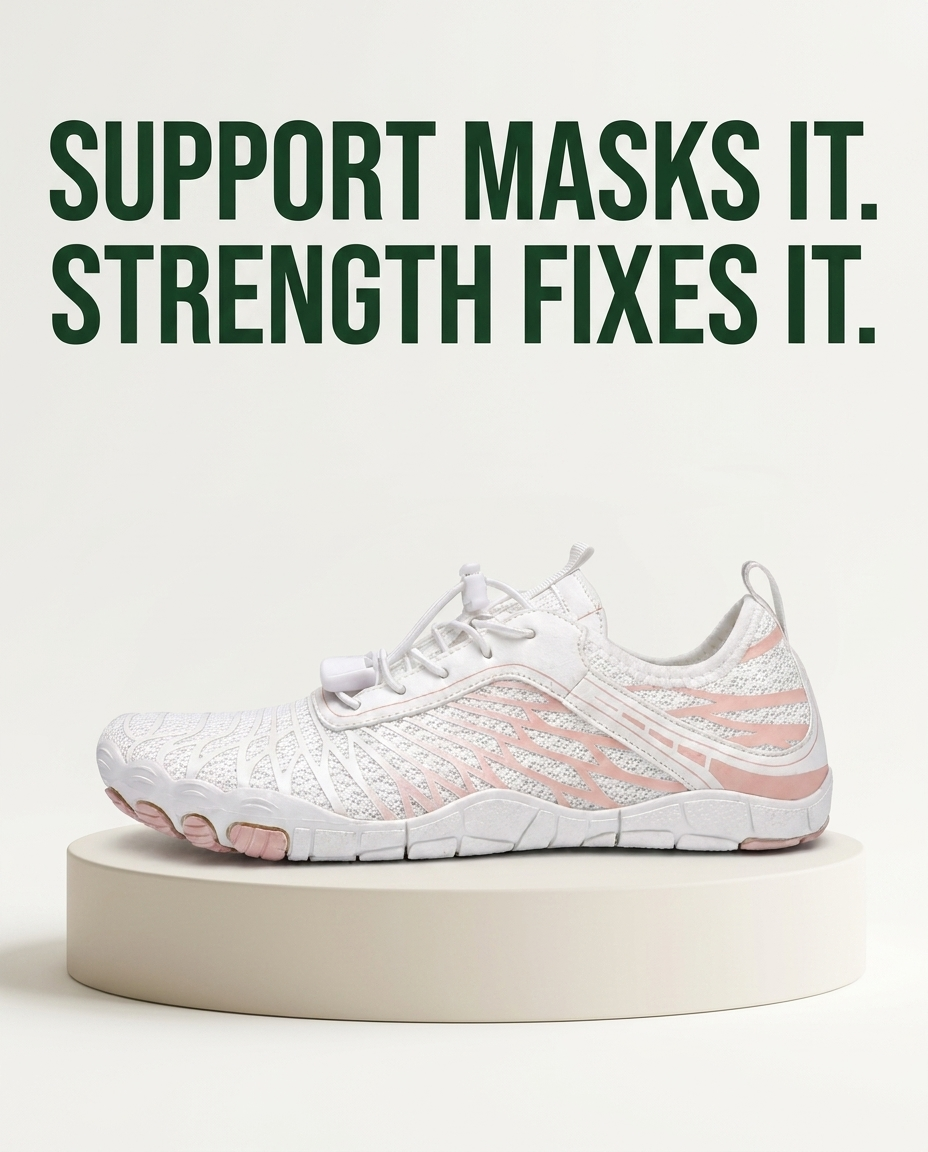
“Every single one of those does the same thing. They support your foot. And a foot that gets supported all day stops working. You’ve spent three years making the problem worse.”
I argued. I needed MORE support, surely — the pain was real! Then she said: “What happens to your arm after six weeks in a cast?”
It goes thin. Weak. Useless. Because it didn’t have to work.
That’s when it landed. Every product I’d bought had been quietly casting my feet. The orthotics, the cushioning, the “support” — all of it took the work away from muscles that were built to do that work. So they wasted. So it hurt. So I bought more support. Round and round for three years.
None of it failed by accident. They all failed for the same reason.
What actually pulled me out
She told me the fix was the opposite of everything I’d done: let the foot work again — gradually, correctly — so the muscles wake up and rebuild. That meant a completely different kind of shoe:
- A wide toe box so my toes could actually spread and grip.
- Zero drop — no raised heel tipping my weight forward.
- A thin, flexible sole so my feet could feel the ground and switch back on.
That’s a barefoot / minimal shoe. And honestly, most of them looked like clown shoes or cost a fortune. Then I found Rewired. Wearable all day, didn’t look like a medical contraption — and it came with a 4-Week Foot Rebuild Guide so I wasn’t just guessing.

I’ll be honest — the first week was weird
My feet talked to me for about ten days. Little aches in muscles I didn’t know I had. But the guide warned me that would happen — it’s muscles waking up, not damage — so I followed it. An hour a day at first. Then more.
I won’t give you a fairy tale. But somewhere around week four, I walked from my bed to the bathroom and realised I hadn’t counted the steps. I hadn’t needed the wall. I just… walked. (Individual results vary — this is my experience.)
What three years of “support” really cost me
Add it up: the orthotics, the trainers, the splint, the physio. Easily over $2,000 — to stay stuck. Rewired was $65. Once. With the rebuild guide included. I’m not angry about the money anymore. I’m angry that nobody told me sooner.
The 60-Night Feet-Back Guarantee
Wear them. Follow the guide. If your feet don’t feel like they’re finally working again, email inside 60 nights for a refund. Keep the guide.
Rewired footwear is designed to support natural foot movement. It is not intended to diagnose, treat, cure or prevent any disease or condition, including plantar fasciitis. Individual results vary. If you have diabetes, neuropathy, or a diagnosed foot condition, consult a qualified healthcare provider before changing your footwear.